P2P Trading Explained: Flexible Access for Modern Traders
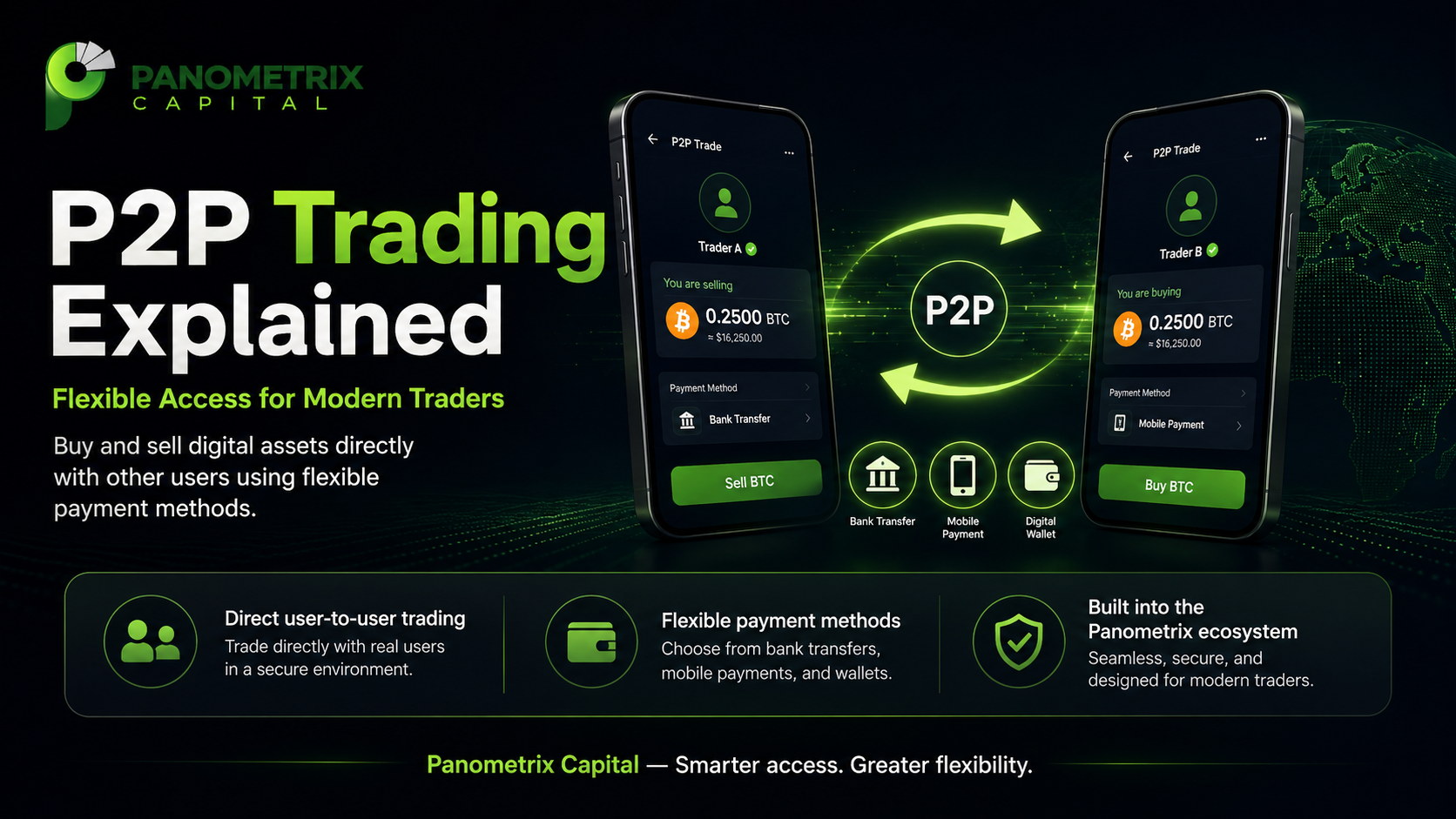
P2P trading gives users a flexible way to buy and sell digital assets directly with other users. Learn why it matters and how Panometrix Capital brings P2P into a broader modern trading ecosystem.
The cryptocurrency market has grown rapidly over the last decade, creating new opportunities for traders around the world. Yet one challenge has remained surprisingly common: accessibility.
For many users, buying and selling digital assets through traditional exchange-only systems can still involve friction. Payment method limitations, banking restrictions, regional barriers, transaction delays, and complex onboarding can make market participation harder than it needs to be. This is one of the main reasons Peer-to-Peer trading, commonly known as P2P trading, has become an important part of the modern digital asset ecosystem.
What Is P2P Trading?
P2P trading allows users to buy and sell digital assets directly with one another, rather than relying only on a centralized exchange process for every transaction. In simple terms, it gives users more flexibility in how they transact.
P2P marketplaces may support local payment methods, bank transfers, mobile payments, regional transaction preferences, direct buyer-to-seller interaction, and more flexible transaction terms.
This creates a more accessible and adaptable trading environment, especially for users who want more control over how they move funds and access the market.
Why P2P Trading Matters
One of the biggest advantages of P2P trading is accessibility. Not every trader operates in the same financial environment. In some regions, traditional exchange infrastructure may be limited, slower, or less convenient. P2P trading helps bridge that gap by giving users another route into the market.
It also provides speed and convenience. Many traders value the ability to choose how they transact, especially when direct fiat-to-crypto access may be delayed or restricted. P2P systems can offer a more user-centered transaction flow, which is why they continue to grow in relevance.
The Shift Toward Integrated Trading Platforms.
As demand for P2P trading grows, users increasingly expect better infrastructure, stronger user experience, and improved transaction security. Modern traders no longer want fragmented systems that separate P2P activity from the rest of their trading experience. They want a connected platform that supports multiple ways to participate in the market.
This is where integrated trading platforms are beginning to stand out.
Rather than treating P2P as a separate feature, modern platforms are bringing it into a broader ecosystem alongside spot trading, futures access, AI-powered automation, copy trading, dashboards, and risk-management tools.
How Panometrix Capital Fits Into This Evolution
Panometrix Capital is part of this new generation of trading platforms.
The platform brings together P2P trading, spot and futures market access, AI-powered tools, copy trading, and user-focused platform features within one ecosystem.
This matters because modern traders want more than access alone. They want flexibility, convenience, and tools that help them participate with more structure and confidence.
With Panometrix Capital, users can explore different ways to engage with the market while keeping their trading experience more connected and easier to manage.
A Bigger Shift in Digital Finance
The rise of P2P trading reflects a broader shift in digital finance.
Users increasingly expect platforms to support different forms of participation while remaining efficient, secure, and easy to use. They want solutions that fit their region, their payment preferences, and their trading style.
P2P trading is helping move the industry in that direction. Of course, users should still approach P2P markets responsibly. Transaction verification, platform safeguards, and risk awareness remain important in any trading environment. But the bigger picture is clear. The future of crypto trading is becoming more flexible, more globally accessible, and increasingly centered around user choice.
At Panometrix Capital, that future is being built through a connected trading ecosystem designed to help users trade with more flexibility, better access, and greater confidence.
For many users, buying and selling digital assets through traditional exchange-only systems can still involve friction. Payment method limitations, banking restrictions, regional barriers, transaction delays, and complex onboarding can make market participation harder than it needs to be. This is one of the main reasons Peer-to-Peer trading, commonly known as P2P trading, has become an important part of the modern digital asset ecosystem.
What Is P2P Trading?
P2P trading allows users to buy and sell digital assets directly with one another, rather than relying only on a centralized exchange process for every transaction. In simple terms, it gives users more flexibility in how they transact.
P2P marketplaces may support local payment methods, bank transfers, mobile payments, regional transaction preferences, direct buyer-to-seller interaction, and more flexible transaction terms.
This creates a more accessible and adaptable trading environment, especially for users who want more control over how they move funds and access the market.
Why P2P Trading Matters
One of the biggest advantages of P2P trading is accessibility. Not every trader operates in the same financial environment. In some regions, traditional exchange infrastructure may be limited, slower, or less convenient. P2P trading helps bridge that gap by giving users another route into the market.
It also provides speed and convenience. Many traders value the ability to choose how they transact, especially when direct fiat-to-crypto access may be delayed or restricted. P2P systems can offer a more user-centered transaction flow, which is why they continue to grow in relevance.
The Shift Toward Integrated Trading Platforms.
As demand for P2P trading grows, users increasingly expect better infrastructure, stronger user experience, and improved transaction security. Modern traders no longer want fragmented systems that separate P2P activity from the rest of their trading experience. They want a connected platform that supports multiple ways to participate in the market.
This is where integrated trading platforms are beginning to stand out.
Rather than treating P2P as a separate feature, modern platforms are bringing it into a broader ecosystem alongside spot trading, futures access, AI-powered automation, copy trading, dashboards, and risk-management tools.
How Panometrix Capital Fits Into This Evolution
Panometrix Capital is part of this new generation of trading platforms.
The platform brings together P2P trading, spot and futures market access, AI-powered tools, copy trading, and user-focused platform features within one ecosystem.
This matters because modern traders want more than access alone. They want flexibility, convenience, and tools that help them participate with more structure and confidence.
With Panometrix Capital, users can explore different ways to engage with the market while keeping their trading experience more connected and easier to manage.
A Bigger Shift in Digital Finance
The rise of P2P trading reflects a broader shift in digital finance.
Users increasingly expect platforms to support different forms of participation while remaining efficient, secure, and easy to use. They want solutions that fit their region, their payment preferences, and their trading style.
P2P trading is helping move the industry in that direction. Of course, users should still approach P2P markets responsibly. Transaction verification, platform safeguards, and risk awareness remain important in any trading environment. But the bigger picture is clear. The future of crypto trading is becoming more flexible, more globally accessible, and increasingly centered around user choice.
At Panometrix Capital, that future is being built through a connected trading ecosystem designed to help users trade with more flexibility, better access, and greater confidence.
Related Articles
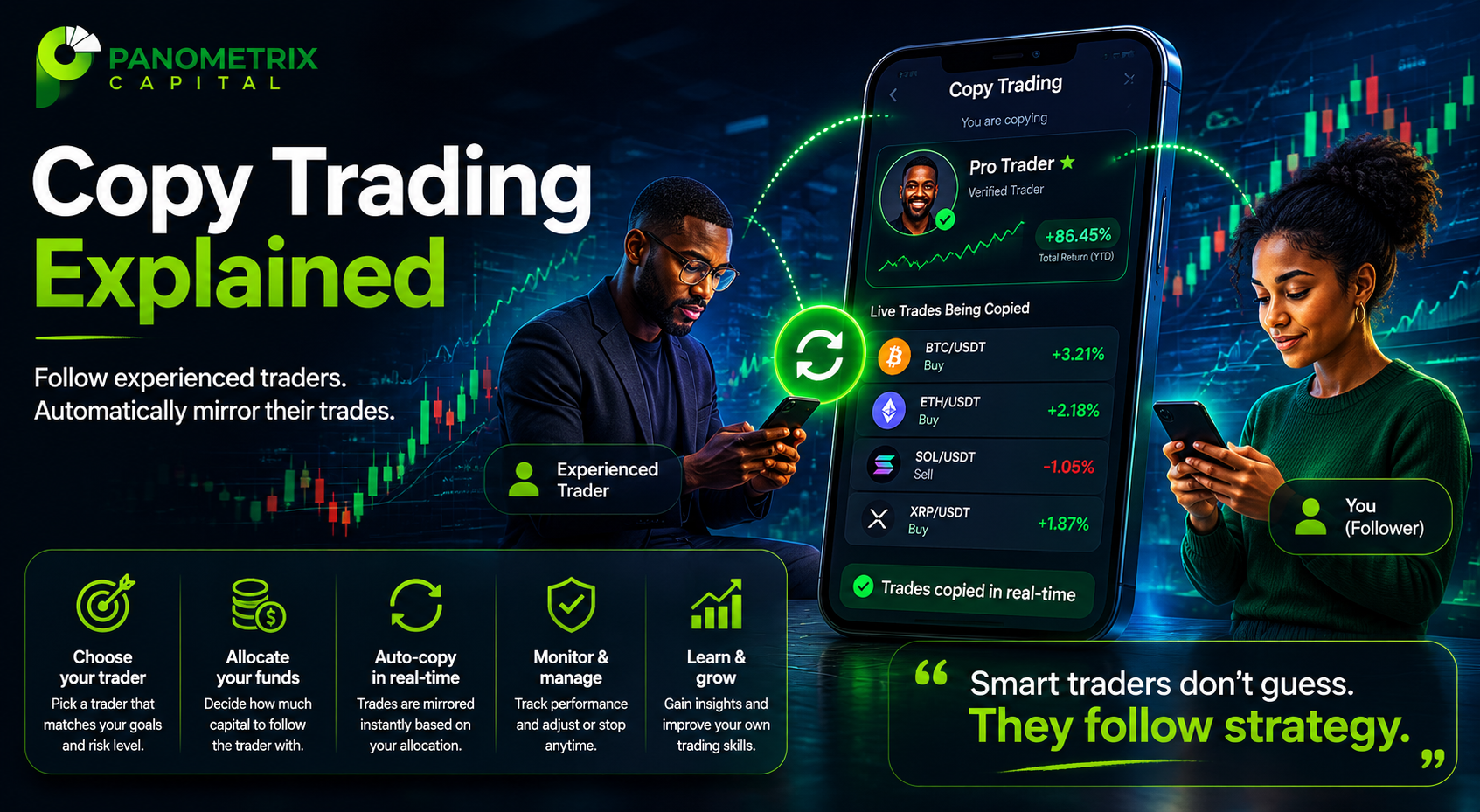
Copy Trading Explained: How Beginners Can Follow Experienced Traders
Copy trading allows users to follow experienced traders and automatically mirror their trades. Learn how it works, its advantages, risks, and how Panometrix Capital helps traders participate with more structure and confidence.
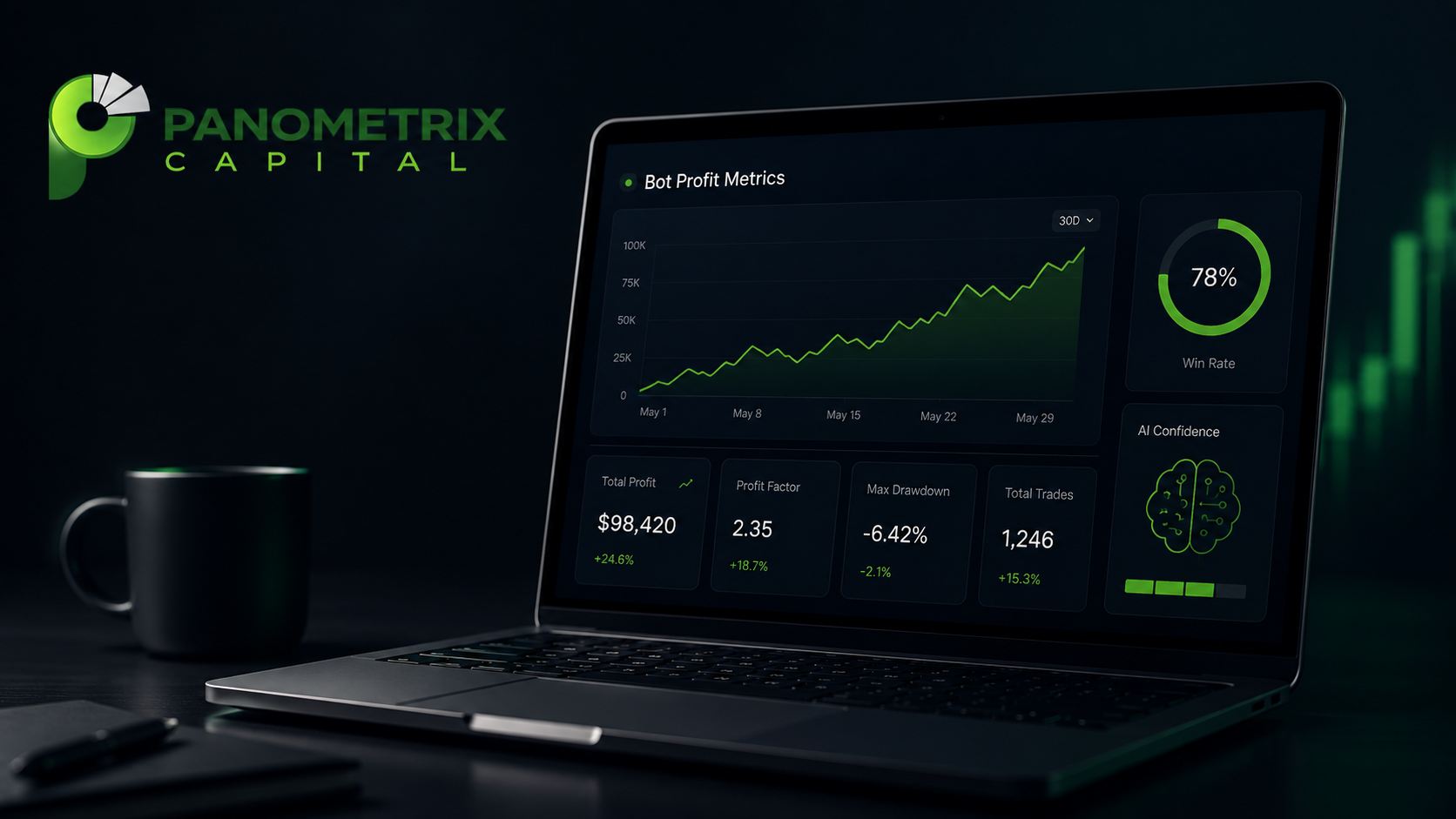
Trading Guide: Understanding Bot Profit Metrics
Before choosing an AI trading bot, traders should understand the numbers behind the performance. Learn how to read ROI, daily percentage, total percentage, risk level, drawdown, and other key bot metrics on Panometrix Capital.